
When a Dream Cotswolds Coach Tour Gets Cancelled — Because the Fear of Needing the Toilet Mid-Journey Is Too Great
Our fictious character, let's call her Nell, 42, juggling a busy career and a young family. She'd been promising herself proper adventures for years—weekends away, coach tours, trips with friends. But IBS made every coach tour, train journey, and long car drive a nightmare of toilet anxiety. Then a barrier-repair discovery changed everything—and gave her back her freedom.


Bloating, cramps and urgency can make everyday situations harder. (Illustrative visualization)
 What You'll Discover in This Article
- Why IBS becomes worse during long journeys (it's not just anxiety — it's your gut barrier)
- The "toilet mapping" trap and how it invisibly shrinks your world
- Why over-the-counter symptom-relief remedies can leave you vulnerable mid-coach
- How barrier damage makes journeys feel impossible (and how it can be improved)
- A clinically studied approach that targets the damaged gut barrier directly - for long distance toilet confidence
- A Lancet-published clinical trial with 443 patients reveals how
Want to understand why coach tours trigger panic—and how addressing a damaged gut barrier may help? Like in our imagined story of Nell, many people across the UK living with IBS face this daily struggle.
 Keep reading
The Brochure That Broke Her Heart
Imagine this: It's a Tuesday morning in March. Nell is at her kitchen table with a printed brochure from one of those classic coach tour companies—the kind that promise cream teas in market towns and golden stone villages photographed in late-afternoon light.
The cover shows the Cotswolds in spring. Rolling hills. Honey-coloured cottages. A four-day tour: The Cotswolds Explorer. Departing Monday morning. Returning Thursday evening. It's precisely the kind of trip she's been promising herself for months—a proper break from the relentless cycle of work, school runs, and weeknight dinners.
Her husband, David, sits across from her with a cup of tea.
"This looks lovely," he says, tapping the cover. "Shall we book it?"
Nell stares at the itinerary. Her eyes don't see the charm anymore. They see the maths—the cold, private calculation she does with every invitation that arrives:
- Coach departs 8 AM. First stop is Moreton-in-Marsh—two hours away. The coach has a small toilet. But what if urgency hits mid-journey and it's occupied? What if it smells? What if everyone knows?
- Full day coach tour. Six-hour drive to South Wales. Six hours. What if her IBS flares? She'll be trapped on a coach in the middle of nowhere with no access to proper facilities.
- Coach to the Wye Valley. Another three-hour journey. Another risk. Another gamble with her body.
- Return journey. Three hours trapped in a seat, hoping her gut cooperates. Praying nothing happens on the M5.
"I can't do this. What if I need the toilet during the South Wales drive? What if I'm trapped for six hours with no way to manage it? I can't risk it. I just can't."
She thinks about the last time she attempted a long journey. Two years ago, she and David drove to Cornwall—a six-hour drive. Three hours in, urgency arrived without warning. Panic set in like a wave. She demanded he pull over at a service station. But even that wasn't enough. She spent the next hour in the motorway toilet, terrified and humiliated, whilst David waited patiently in the car park.
They eventually reached Cornwall. But Nell spent the rest of the trip in dread, anxiously scanning for the next services, terrified of another "episode" happening on the road. The holiday was ruined before it began.
The Pattern of Cancellations
That Cornwall disaster wasn't isolated. It established a pattern—one that has been quietly dismantling Nell's social life ever since:
- Last summer: Her daughter invited her on a coach trip to London to see a West End show. Nell declined.
- Last autumn: Her sister organised a day coach trip to the Yorkshire Dales. Nell declined.
- Christmas: Family coach trip to see the Christmas lights in Blackpool. Nell declined.
- This winter: Her book club organised a day trip to a stately home. Nell declined.
Every invitation arrives with the same internal calculation: "Can I guarantee access to a toilet for the duration of this journey?"
Most answers: "No."
And so the world shrinks. Not with a dramatic collapse, but with a steady, quiet erosion. One cancelled trip at a time. One polite excuse after another. Until the invitations start to slow—because people stop asking someone who always says no.
The Grief Nobody Talks About
Nell has spent her thirties and early forties working flat out. Meetings, deadlines, email, school pick-ups, bedtime routines. She kept telling herself: "Once the kids are a bit older, I'll actually do things. The Highlands, the Lakes, Cornwall, the coast paths. I'll finally get out there."
Now, at 42, the children are finally old enough. Her career is established. She has some disposable income. She's supposed to be in the best years of her life—fit enough, financially stable enough, and ready to actually enjoy herself.
Instead, she's becoming increasingly housebound. And the worst part? Nobody understands why. Her friends think she's become a homebody. Her family assume she prefers staying in. Nobody sees the silent, exhausting anxiety that lies behind every declined invitation.
David is still waiting for an answer.
"Well?" he asks. "Shall I book it?"
Nell looks at the brochure again. The golden stone villages. The cream teas. The promised freedom. Then she looks at the itinerary. All those long coach journeys. All those hours where she can't escape. All those opportunities for her body to betray her.
"I don't think so," she says quietly. "Maybe something closer to home?"
David nods. He knows what this really means. He's seen this pattern before. Another cancelled trip. Another missed adventure. Another reminder that Nell's body is her jailer.
This Isn't Cowardice. This Is a Gut Barrier Issue.
Listen: if you recognised yourself in Nell's story—if you've ever mapped every toilet between your home and your destination, or declined a day trip because the journey was too long—you need to hear this.
This isn't a character flaw. This isn't agoraphobia (though it can look frighteningly similar). And this isn't something willpower can fix.
This is barrier integrity.
Your gut has an intestinal barrier — a protective lining that functions like a shield.[3] When it's healthy, it keeps undigested food, bacteria, and toxins where they belong: inside the gut, moving through properly, on schedule.
When it's damaged, the barrier develops gaps. Undigested particles and toxins can leak through into the surrounding tissue. The enteric nervous system in your gut sounds the alarm. And the result is what you know all too well: unpredictable, urgent diarrhoea that arrives without warning and demands an immediate toilet.
Medical researchers call this "Increased Intestinal Permeability."[3] You may have heard it called "leaky gut." It's measurable. It's real. And — this is the part that matters — It can be improved significantly.
What Your Travel Anxiety Is NOT:
- Psychological agoraphobia that requires therapy alone
- A character flaw or lack of courage
- Something willpower can fix
- Permanent without intervention
- Something over-the-counter symptom-relief remedies can reliably solve
The travel-specific problem is brutal. On a coach, train, or during a long car journey: you can't pull over immediately. The toilet might be occupied or locked. You can't leave the group. The social humiliation of asking the driver to stop is overwhelming. And anxiety itself triggers IBS symptoms, creating a vicious cycle that feeds on its own fear.
This isn't a fear of travel — it's a physiological issue with the gut barrier, and a damaged barrier can be addressed.
If fixed - You could sit on a coach for six hours without panic. Your gut became reliable. Your body would cooperate. And the anxiety—which was always a rational response to an unreliable body— might dissolves naturally.
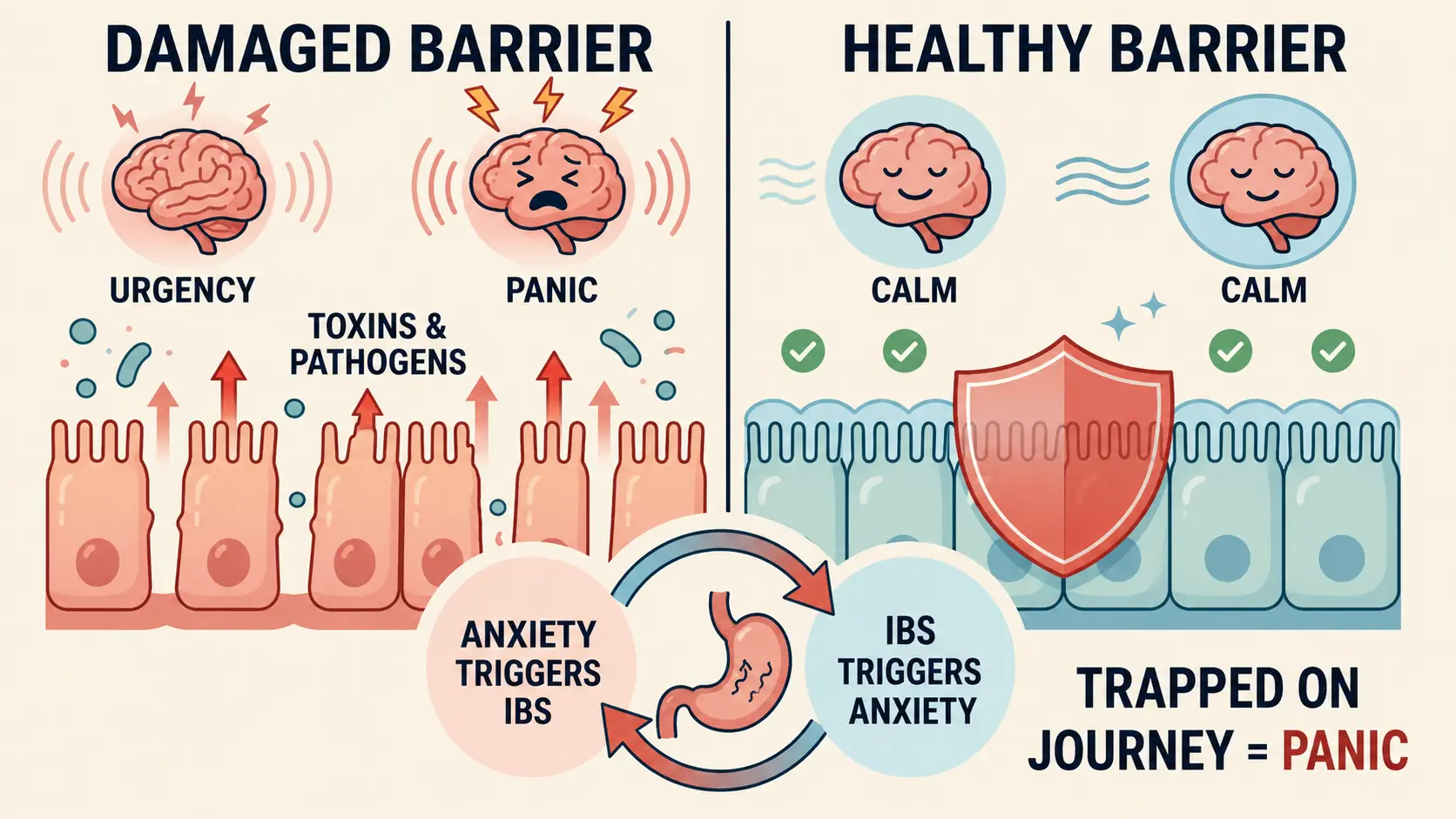
A damaged barrier may be associated with unpredictable urgency — which on a long coach journey can feel overwhelming. The underlying issue is physiological, not a psychological weakness. Illustrative diagram.
Your Coach Tours Aren't Cancelled. They're Postponed.
The good news: the gut barrier can be addressed in many cases.
The better news: travel confidence happens in four to six weeks.
The best news: once it’s repaired, in cases where it is addressed, you may be able to sit on a coach for eight hours without panic or urgency.
In the clinical study, symptom scores improved progressively over the 8-week treatment phase.
While Nell is fictional, stories like hers play out daily for thousands of real people across the UK living with IBS. That Cotswolds tour doesn't have to stay a dream.
What this means in practice:
- You may be able to book coach tours with less fear
- You may be able to sit for longer journeys with reduced anxiety
- Group holidays and day trips may feel more manageable
- Long car journeys may become less daunting
- Flying and travel may feel less stressful
- Day trips with the family could become possible again
- You may start reclaiming the adventures you've been putting off
In a Lancet-published clinical trial, HI-MIMBb75 demonstrated how many people regained there travel freedom - by addressing their gut barrier. [1]
Kijimea IBS PRO — Targeting the Damaged Gut Barrier
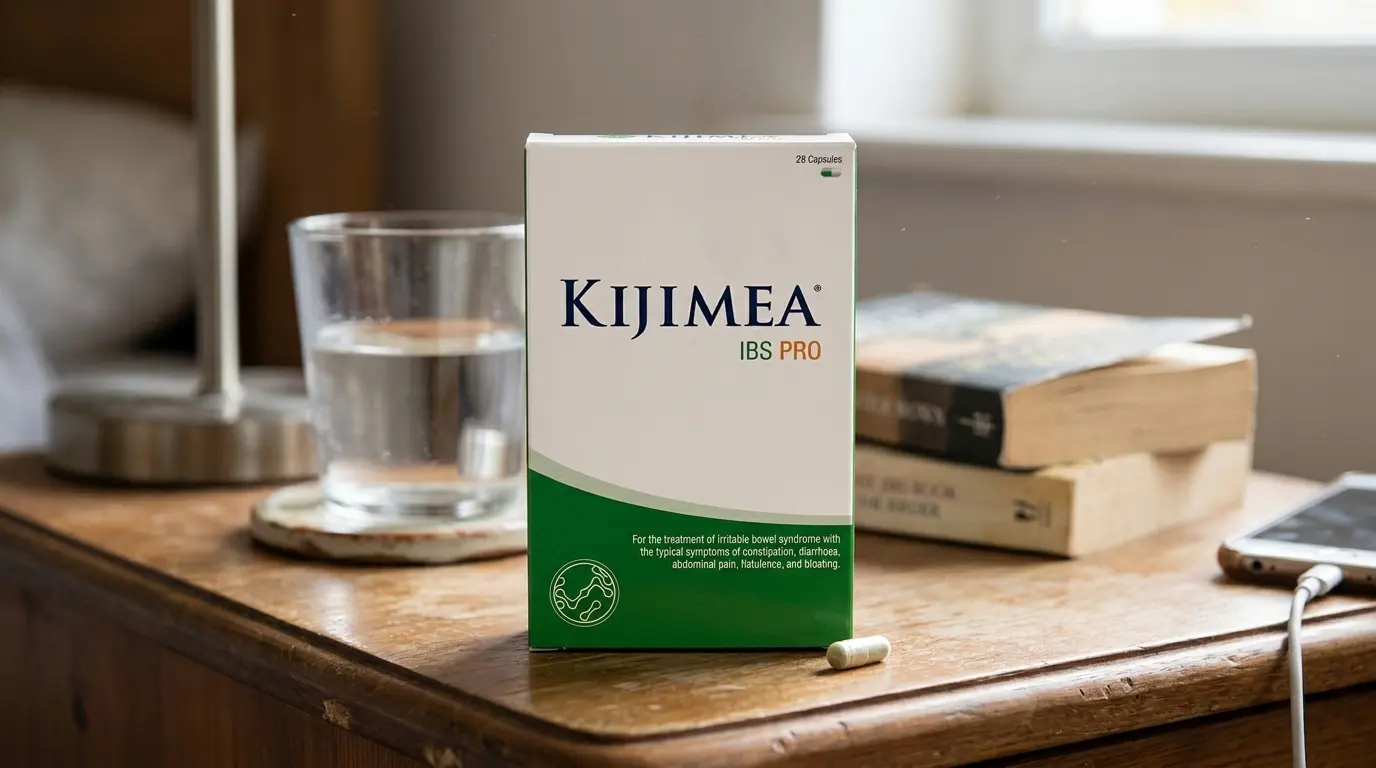
The potential solution comes from Germany - KIJIMEA IBS PRO is the leading IBS medical device across Europe, and now also finally available in the UK. For many people, it can provide the support needed to help address the damaged intestinal barrier. This means the potential to travel with less fear and urgency—offering the chance to sit on a coach and focus on the scenery, rather than the nearest toilet.
How It Works
The active ingredient is a heat-inactivated strain of Bifidobacterium bifidum called HI-MIMBb75. Unlike many traditional probiotics that focus on adding live bacteria to the gut, this strain is designed to target the intestinal barrier directly. HI-MIMBb75 physically adheres to the damaged gut barrier[2] — much like a protective patch — and has demonstrated to significantly improve IBS symptoms in a clinical trial published in the Lancet.[1]
- Adheres to the damaged gut barrier like a patch [2] — and has demonstrated to significantly improve in symptom frequency [1]
- Heat-inactivated — completely stable, no degradation during travel, heat, or altitude
- Doesn't require bathroom access — unlike over-the-counter remedies that manage symptoms temporarily
- Survives stress and travel disruption — unlike live probiotics that may degrade
Think of it as a daily dose targeting the damaged gut barrier. Two capsules with breakfast—thirty seconds—and the process happens in the background whilst you get on with your life. No complex regime. No lifestyle overhaul. No dietary restrictions.
What can change - week by week
Kijimea IBS was studied in a LANCET published IBS gold standard trial - here are some of the results:
- Early weeks: Many patients report the first signs of improvement in symptom frequency.
- By week 4–6: In the clinical study, progressive improvement in the Composite Symptom Score was observed.
- Week 8 (end of study): 34% of patients on HI-MIMBb75 achieved significant improvement on the primary Composite Symptom Score vs. 19% on placebo.
A Different Starting Point: The Damaged Gut Barrier
Most familiar approaches to IBS focus on managing symptoms when they appear, or on avoiding situations where symptoms might strike. Kijimea IBS PRO works from a different starting point: the intestinal barrier itself.
 Lancet-Published Clinical Evidence
In the Lancet-published clinical trial (Andresen et al., 2020 — 443 patients, 20 German centres, double-blind, placebo-controlled, 8-week treatment phase), HI-MIMBb75 was associated with statistically significant improvement on the primary Composite Symptom Score versus placebo.[1]
The Lancet Study: 443 Patients, 20 Centres — What the Evidence Shows
When reporting on medical evidence, the priority is singular: ensuring the findings have been published in a peer-reviewed journal trusted by the medical establishment.
Kijimea IBS PRO meets this standard. Its clinical results were published in 2020 in The Lancet Gastroenterology & Hepatology—one of the most prestigious medical journals in the world. Having undergone rigorous peer-review by leading gastroenterologists, the data represents the gold standard of medical evidence in its field.
The Trial
- 443 patients across 20 German clinical centres
- Double-blind, placebo-controlled methodology
- 8-week treatment phase with rigorous outcome measurement
The Results
34% of patients on HI-MIMBb75 achieved statistically significant improvement on the primary Composite Symptom Score, compared with 19% on placebo.[1]
More specifically:
- Diarrhoea frequency: significantly reduced as part of the Composite Symptom Score - for long distance toilet confidence
- Quality of life: improvement on SF-12 scores, including ability to participate in activities
- Tolerability: no known side effects or interactions
- Safety: no serious adverse events were observed in the clinical trial
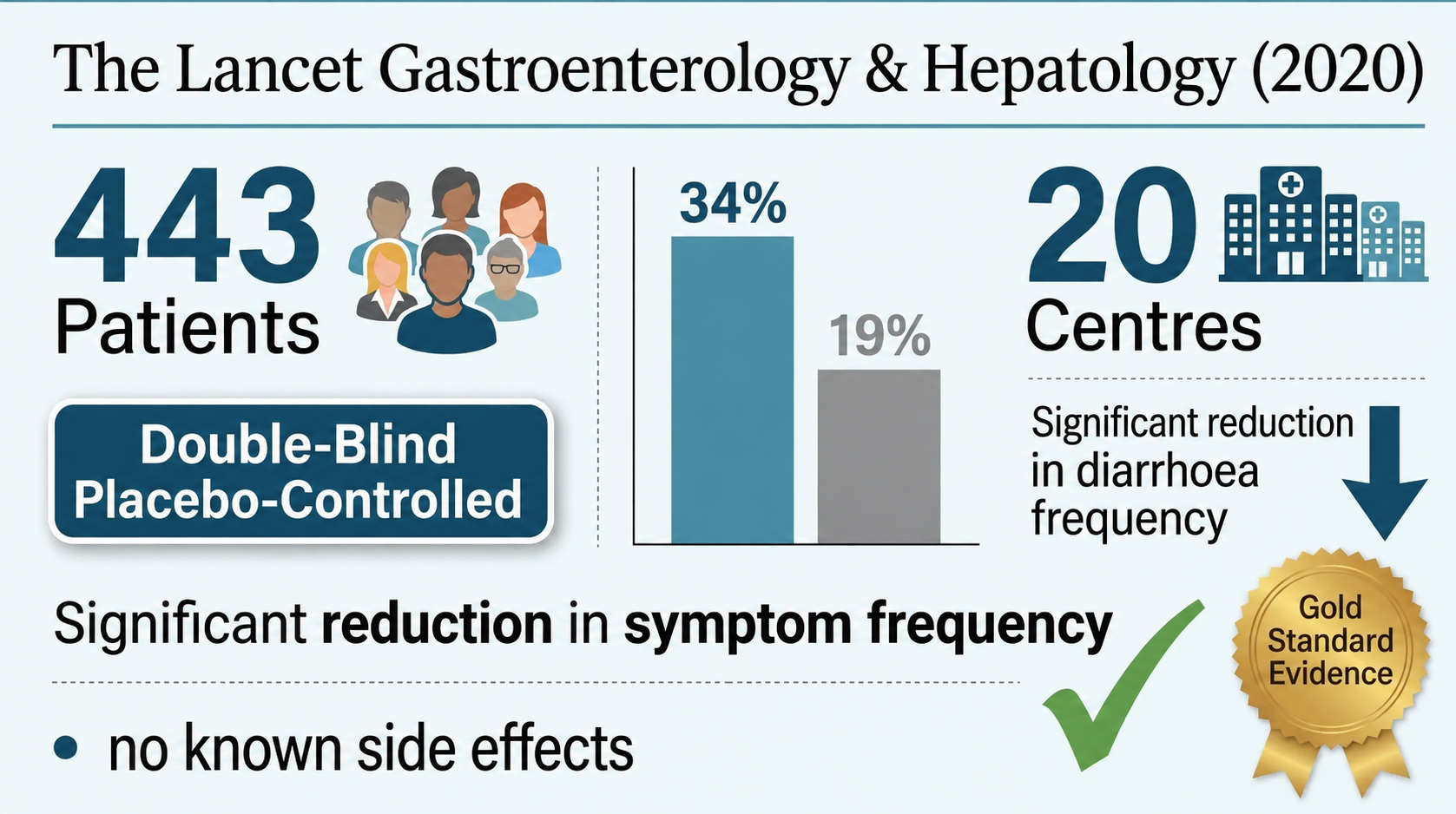
Published in The Lancet Gastroenterology & Hepatology (Andresen et al., 2020).[1] 443 patients. Double-blind. Placebo-controlled. Peer-reviewed clinical evidence.
What this means for you, specifically: the study measured diarrhoea frequency as part of the Composite Symptom Score — relevant to travel confidence. And it measured quality of life improvement — the ability to participate in activities. The results showed statistically significant improvement for HI-MIMBb75 vs. placebo.
Clinically Studied for IBS Symptoms
Based on Lancet-published research (Andresen et al., 2020) and 443-patient evidence:
 2 capsules daily with breakfast
Heat-inactivated HI-MIMBb75 — Lancet-published clinical evidence
Clinically studied over 8 weeks; in the study, symptom scores improved progressively
 30-day money-back guarantee
Honest Answers to Every Doubt You're Having Right Now
If you recognise yourself in this imagined scenario, you likely have doubts. The objections are always the same — and they're all reasonable. Let's address them directly.
"I've tried everything. What makes this different?"
Because you've been managing symptoms, not addressing the underlying issue. Over-the-counter symptom-relief remedies provide temporary, unreliable relief — they're a dam, not a solution. Avoiding journeys prevents symptoms but shrinks your life to the radius of the nearest toilet. Anxiety management helps psychologically but doesn't address the actual unpredictability of your gut. Kijimea IBS PRO addresses the damaged gut barrier. And it works: In the Lancet-published clinical trial, this approach clearly showed significant symptom improvement. That's why travel may become possible again — because of demonstrated efficacy in the Lancet-published clinical trial.
"What if symptoms return mid-journey?"
For maximum confidence, take the capsules for at least 8–12 weeks, as symptom relief built up over time in the study. Honest answer: it does not work for everybody. BUT over 60% of patients in the study experienced adequate symptom relief, an impressive number!
"What if I'm on the coach and something goes wrong?"
The recommended clinical course is 8-12 weeks. By the time you consider longer travel, you'll have observed your own symptom response over weeks. You're not white-knuckling through a journey hoping a temporary remedy holds. You're travelling after a clinically studied treatment course that has targeted the root cause of your problems: the damaged gut barrier.
"This costs money. I've already spent on remedies, cancelled trips..."
How much have you already spent on over-the-counter remedies that don't reliably work? How much on cancelled coach tours where you've forfeited deposits? How much on the shorter, "safer" holidays that are second-best to what you actually want? The treatment course is an investment in addressing the underlying issue — not another temporary fix.
"Can I take this while travelling?"
Yes. Two capsules daily with breakfast — takes thirty seconds. No refrigeration needed. No special storage. No dietary requirements. Perfect for travel. The treatment continues in the background whilst you're exploring the Cotswolds or sitting on that coach admiring the Wye Valley.
"Will it work fast enough?"
Many patients report improvement within a few weeks. You don't have to wait for the full course to feel better. In the clinical study, symptom scores improved progressively over the 8-week treatment phase.
"What if it doesn't work for me?"
Thirty-day money-back guarantee. Try it for a full month — if you don't see improvement in symptom frequency, you get your money back.
Setting Realistic Expectations
 What IS Realistic
- Many patients report improvement already within a few weeks or even days
- Progressive symptom improvement over the 8-week course
- Significant improvement on Composite Symptom Score (over 60% of patients in the study experienced adequate symptom relief)
- Improved symptom predictability
- Increased travel confidence
 What Is NOT Realistic
- Overnight results (the barrier needs time — the study ran over 8 weeks)
- Never having another flare-up
- Ignoring all triggers forever
Flare-ups may become less frequent, but are not eliminated entirely. Better tolerance is possible, but common sense still applies.
Imagine Your Life With More Confidence
Your friend rings. "There's a coach tour to the Lake District next month. Are you coming?"
You say yes. Not because you're hopeful. Not because you're being brave. Because you have regained trust in your gut - and you feel the difference. You've had weeks of stability. Your body has proven itself.
You book the coach tour. You pack your bag. Monday morning arrives. You get on the coach.

"Not the woman who stays home because of her gut. The woman who travels and explores."
The Small Victories That Change Everything
- Saying yes to a coach tour invitation—without hesitation
- Sitting on a coach for longer stretches with less worry about the toilet
- Eating a meal during a journey with less dread
- Feeling more open to discussing travel plans with friends
- Considering a weekend away with friends in another city
- Feeling more confident about spontaneous day trips
- Rediscovering a sense of adventure — gradually, at your own pace
- Starting to rebuild your sense of bodily confidence
The role you may begin to reclaim isn't just "traveller." It's the woman who shows up more often. Who starts joining the group again. Who sees the Christmas lights and the stately homes and the Cotswolds in spring. Who feels less controlled by her body's unpredictability.
Your best years aren't lost. The gut barrier may be damaged — and addressing it through a clinically studied approach may help you regain your confidence!
Your Best Years Aren't Over
A clinically studied treatment course may help address your damaged gut barrier.
Begin your treatment course today.
Your freedom is waiting - feel the difference!
Begin Your Treatment Course Today →Why other solutions fail so often - and why this one is different
You may have spent years working around your IBS: mapping toilets, declining invitations, and trying remedies that addressed symptoms rather than the underlying issue. Stories like this play out daily for thousands of people across the UK living with IBS.
Kijimea IBS PRO is built around a different starting point: the damaged intestinal barrier. And it has proven its efficacy - the Lancet study clearly demonstrated this!
Why You Can Trust This
In health journalism, you have to be deeply sceptical. Most "gut health" products are supplements with impressive marketing and thin evidence. Kijimea IBS PRO is different in ways that matter:
 German Medical-Grade Manufacturing — Precision engineered under MHRA-equivalent quality standards
 Classified as a Medical Device — manufactured and distributed under the MHRA framework
 Published in The Lancet Gastroenterology & Hepatology (Andresen et al., 2020 — peer-reviewed, 443 patients)No Known Side Effects or Interactions
  Travel-Stable — No refrigeration needed, survives heat and altitude
 Simple Daily Dose — Two capsules with breakfast, thirty seconds, done
 Clinically Studied — Composite Symptom Score improvement measured in the clinical trial
 30-Day Money-Back Guarantee
 This isn't a leap of faith. It's a clinically proven, Lancet-published, medically regulated product with a money-back guarantee. For a health correspondent, that's about as safe a recommendation as it gets.
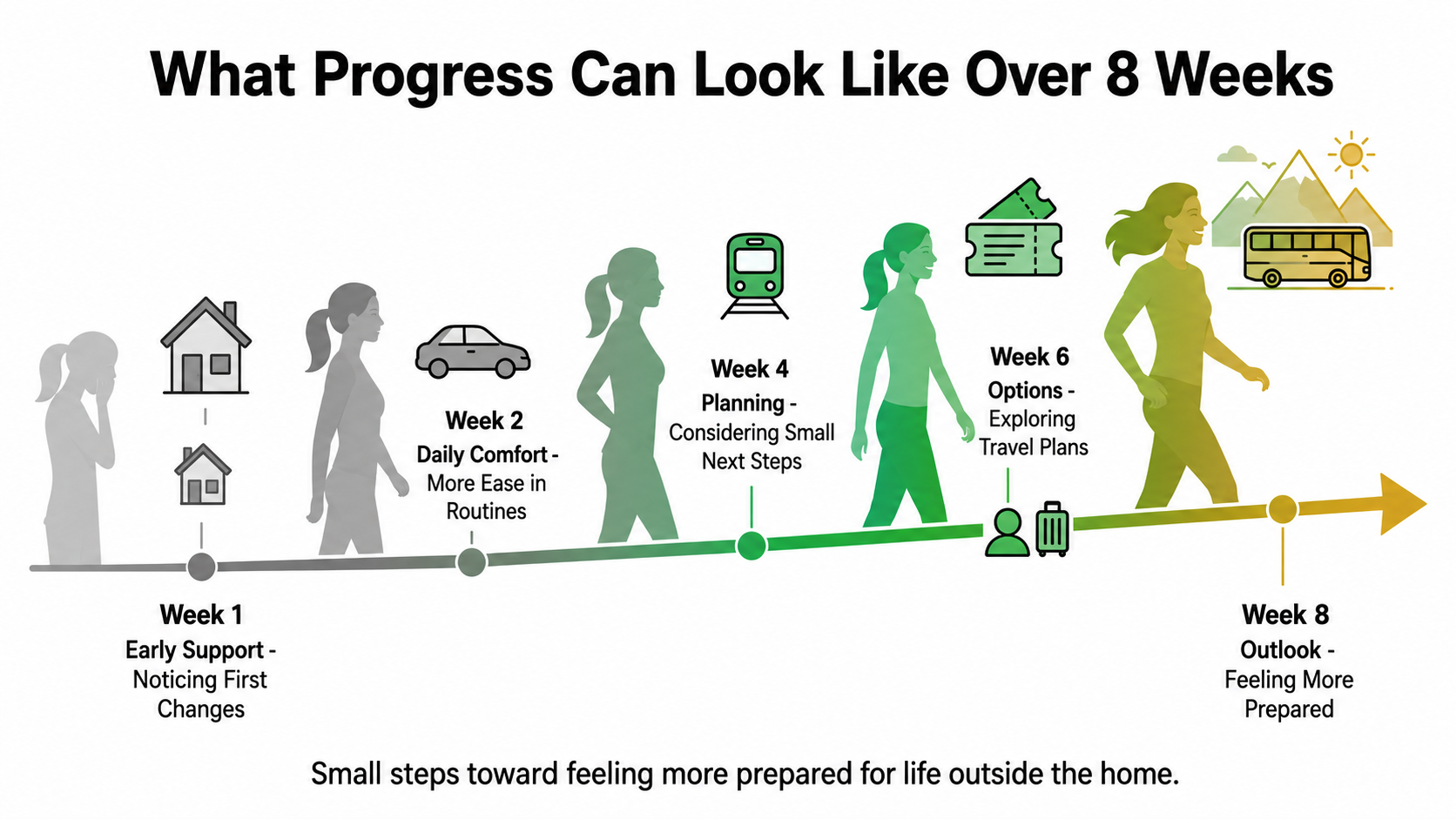
Composite Symptom Score progression over the 8-week treatment phase, based on Andresen et al., The Lancet Gastroenterology & Hepatology (2020). Illustrative representation. Individual results may vary.
What Our Customers Say
 Verified Customer
I have suffered with IBS for two years now, living with the stressful 'What if ...'. I have now taken Kijimea IBS Pro for three weeks and I have noticed less urgency. I hope that this will improve further in weeks to come.
Burtonwood, GBVerified CustomerWorked within two days. No unpleasant side effects easy to use.
Edinburgh, United KingdomVerified CustomerI have suffered from IBS for about 30 years. I have tried so many remedies and diets. This product has been an absolute game changer. It seems to have settled my bowel habits within 7 to 10 days. I would recommend anyone with IBS to try it
Buxton, GBVerified CustomerIBS symptoms have dropped dramatically after a month of using these. Less bloating and pain and more regular toilet trips!
London, GBVerified CustomerIt's a miracle works wonders wouldn't be with out it
Hendon, United KingdomVerified CustomerI have been taking kijimea ibs pro now for three weeks and I am feeling the benifit. It has helped with stomach pain and diarrhoea..hopefully it will carry on...yes symptoms have certainly improved
Walthamstow, GBVerified CustomerKijimea has given me a new lease of life. With my ibs
Barnstaple, GBVerified CustomerI suffered from embarrassing flatulence and I have been taking Kijimea for a month now and there is improvement.
London, GBVerified CustomerAmazing product. Turned around a very bad condition which had lasted 20 years in a matter of weeks. Highly recommend!
London, GBVerified CustomerKijimea IBS PRO 84 has profoundly changed my life for the better. Nothing else worked for me. Symptoms like diarrhea and embarrassing flatulence have stopped. In my case, I needed to take Kijimea for just over 3 months for healing to take place. I highly recommend Kijimea IBS PRO 84.
Leicester, GBVerified CustomerThey have really helped I feel happier able to go out now not feel my bowels will leak.
Gloucester, GBVerified CustomerThis is my second order. I've found it effective in helping control my IBS (D)
Verified CustomerYou Deserve More Than This.
Don't Let IBS Trap You at Home.
Begin your treatment course today.
 1 month supply (£45)Medical device — Lancet-published clinical evidence (Andresen et al., 2020)
 30-day money-back guarantee
  Available online, travel-stable, no refrigeration required
Results may vary. 30-day money-back guarantee.